
Definitions - e
- E-Waste
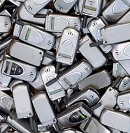
This term doesn’t refer to all the spam filling your email box, though those messages do waste plenty of time. E-waste is actually the millions of tons of electronic products, computers, cell phones, and the like that enter the waste stream worldwide each year. As newer, better, cooler gadgets come on the market, the piles of e-waste grow ever higher. Aside from their contribution to landfills, many electronic devices contain hazardous materials, such as mercury; many also contain valuable, reusable materials that can be recycled. There are some simple ways to limit e-waste: Buy quality products that can be upgraded instead of replaced; donate old equipment (to a school for instance); and seek out recycling programs when you’re ready to dispose of an item. Also called electronic waste.
Search the Web for E-Waste- Eccentricity
The amount that the earth's revolution deviates from a circular path; the variation of an ellipse from a circle, where a circle has an eccentricity of 0.
Search the Web for Eccentricity- Eco Anxiety
Eco-anxiety is a chronic concern over environmental issues. This is not recognized as an official mental disease or dis-order. Rather it is a 'label' given to being overly concerned to the environment and a general feeling of helplessness in how to 'fix' it.
Being concerned about the environment is a good thing; in order to overcome any concerns you may have, we suggest
- Read the articles on this site (its not as bad as some people are painting it)
- Educate yourself on the issues at hand. Having a better understanding and knowledge set will allow you to internally 'rationalize' your concerns and work out how to actually do something effective. Do not be blindly guided by others, keep your own council and point of view.
- Eco Architect
- An Eco Architect is an architect that specializes in producing designs that should:
- Minimize environmental impact, across the whole life cycle of the resultant building;
- Maximize the use of recycled or reclaimed materials;
- Minimize the operational costs of the buildings by employing energy efficiency techniques in the building design.
The end result should be a building which is good for the environment and cheap to live in.
Although, with the increased focus on being green in building, quite often regular architects either have direct 'eco' experience or have access to experts or resources to assist them - so do not select on the basis of an architect being eco alone.
Search the Web for Eco Architect - Eco Architecture
Eco Architecture refers to designing buildings with a strong green and environmental element to them; e.g sustainable and minimizing the environmental impact of the final design.
Search the Web for Eco Architecture
Note: This does not necessarily mean existing buildings cannot be made more 'eco' rather this is focused on taking a new building and designing it from the ground up to be more eco friendly. When building it pays to consider the benefits of reusing an existing structure over knocking down and replacing it.
- Eco Conscious
Being an informed purchaser. Knowing or having an understanding of what effect what you are doing, buying or using has on the environment.
Note: This is not just buying 'eco-friendly' or 'green' products or services, rather you have a more direct appreciation of your impact on the environment based on knowledge & act accordingly.Search the Web for Eco Conscious- Eco Friendly
This refers to a product or service having minimal impact on the environment in its provision. Unfortunately how 'minimal' is determined is somewhat open to interpretation and often depends upon context. This is also a phase that is often hijacked as part of a green washing campaign; so double check any claims.
Search the Web for Eco Friendly- Eco Fusion
A very fuzzy 'Eco Marketing' term used to represent the fusion of many disciplines (including education, training, experience, materials availability, and eco inventions); on the premise that we need to tightly merge those disciplines to solely focus on 'improving the environment' in light of climate change. Often used to contrast against more loosely coupled business processes and distinct disciplines as being more 'green'; when often the real motivator is for the Eco Fusion advocate to 'control' more of the purchasing and business process for direct profit; in essence a form of ecofraud.
Search the Web for Eco Fusion- Eco Graffiti
Mud stencils that create messages made of natural plants such as moss, intended for art and social justice, not advertisement.
Search the Web for Eco Graffiti- Eco Lights
Eco Lighting is lighting which is both energy efficient and has a light burden on the environment, i.e. they are easy to recycle and repair.
Eco Lighting can also refer to smart lighting that is able to reduce its energy consumption in response to its need, i.e. lights that automatically turn off when people leave a room or lights in a garden that only come on at night or respond to movement. Eco Lights can also be self contained solar powered units often used in gardens.Search the Web for Eco Lights- Eco Marketing
-
This is when a business deliberately markets itself as being 'eco' above and beyond the core functions or services of the business; when in actuality the business is not eco at all. This form of ecofraud is done to firstly pray on peoples tendency to assume anything eco is good; then secondly to utilise people's tendency not to question anything eco to sell on its core functions or services easily to eco minded people.
As we always recommend, make sure you have the real facts at hand (look on this site and use our search engine) and always shop around and do not over prefer the 'eco businesses' - quite a few businesses now are eco minded without feeling the need to promote it.
Search the Web for Eco Marketing - Eco Tourism
Travel that entails destinations where natural and cultural heritage are the primary attractions. Typically including environmental awareness aspects of the locale.
Search the Web for Eco Tourism- Eco Village
An Eco Village is usually a planned development of a set of properties which have a combined low environmental impact. Either implemented by a developer or by a set of individuals. The resultant properties can range from being very traditional to totally unique depending on planning requirements and available resources.
Search the Web for Eco Village- Eco Warrior
A person actively involved in preventing damage to the environment
Search the Web for Eco Warrior- Eco-architect
An eco-architect is someone in the building design field (architecture) who either has specific training in designing eco-friendly houses, or equivalent accumulative knowledge.
Search the Web for Eco-architect
This used to be quite a specialist field, as the methods and techniques employed were only understood by a minority of architects and designers; although now the ability to create eco-friendly houses can be enacted often by a regular architect, designer or drafts person using either specific software applications or following well understood principals of eco-friendly design (such as passive solar). Also the increased focus by local goverments through planning law on green building has made it almost universal that all architects or designers have had some experience with eco-friendly design.
- Eco-assessment
An evaluation of your home or workplace with the aim of cutting your energy and water usage.
Search the Web for Eco-assessment- Eco-bag
An ethically and organically made bag for use instead of plastic carrier bags.
Search the Web for Eco-bag- Eco-Bus
A bus which uses a combination of diesel and electric power sources.
Search the Web for Eco-Bus- Eco-chic
A product or good that is both eco-friendly and hip.
Search the Web for Eco-chic- Eco-Spun
A textile product using PET (Recyclable plastic bottles) and processed to create fibres to be knitted or woven into the fabric.
Search the Web for Eco-Spun- Ecocentric
having a serious concern for environmental issues: ecocentric management.
Search the Web for Ecocentric- Ecodesign
Ecodesign is an approach to design of a product with special consideration for the environmental impacts of the product during its whole life cycle. In a life cycle assessment the life cycle of a product is usually divided into procurement, manufacture, use and disposal.
Search the Web for Ecodesign- Ecofeminism
Term introduced (“ecofeminisme”) by Francois d’Eaubonne in the 1974 text Le Feminisme ou la Mort. Dissatisfied with ecological analyses that leave patriarchy out of account, ecofeminists out parallels between how men in the West mistreat women and how they mistreat the Earth: in both cases a relationship of power, control, a will to dominate, and a pervasive fear of of the fact of interdependency. A twist on this is the patriarchal habit of objectifying women while feminizing the environment; women are then seen as less mature or human because "closer to nature."
Search the Web for Ecofeminism- Ecofraud
-
This term is associated with a business/group or individual who engages in or who presents themselves as being a subscriber to sound science based eco and environmental principals; when in fact they are either:
a) solely being 'Eco' for personal or monetary gain, with little real regard for any eco or environmental principals or,
b) totally misrepresenting, misapplying or distorting sound scientific based eco and environmental principals to add weight to an argument or issue.The first case is usually very deliberate in intent; whereas with the second case, a person or group can be 'duped' into believing and then promoting an 'eco fact' - when in fact it may have little empirical or scientific basis when the bigger picture (either in time or space) is considered.
This in itself is nothing new, misquoted and misunderstood information abounds in everyday life; but what is concerning is the degree of lack of question and real knowledge share that often occurs when people are confronted with an 'Eco fact'; please demand to be informed. Remember: a decision based on ecofraud info could well be doing longer term harm to our Environment.
Search the Web for Ecofraud - Ecofriendly
Environmentally friendly (eco-friendly and nature friendly) are synonyms used to refer to goods and services considered to inflict minimal harm on the environment.
Search the Web for Ecofriendly
To make consumers aware, environmentally friendly goods and services are often marked with eco-labels. But because there is no single international standard for this concept, the International Organization for Standardization considers such labels too vague to be meaningful.
See wikipedia.
- Ecohome
An Ecohome is a house which has been designed from the ground up to be environmentally friendly whilst at the same time energy efficient.
Search the Web for Ecohome
Usually this requires a custom build (which can be expensive); although with some careful thinking it is possible to make an existing property more eco friendly whilst preserving the embedded energy incurred when it was built. Too often existing properties are demolished that could have been made 'good' with a bit thought.
- Ecolabel
A seal of approval (or certification) of a product, process or service complying with a particular set of agreed environmental criteria usually awarded by an impartial third party (certification company).
Search the Web for Ecolabel
- Ecological Dimension
The ecological dimension describes the relationship between people and the environment and the effect that they have on each other in turn.
Search the Web for Ecological Dimension- Ecological Impact
The effect that a man-caused or natural activity has on living organisms and their non-living (abiotic) environment.
Search the Web for Ecological Impact- Ecological Succession
This is the gradual and orderly process of change in an ecosystem brought about by the progressive replacement of one community by another until a stable climax is established.
Search the Web for Ecological Succession- Ecological Sustainability
Capacity of ecosystems to maintain their essential functions and processes, and retain their biodiversity in full measure over the long-term.
Search the Web for Ecological Sustainability
Essentially it refers to the ability of an ecological system to 'keep running' over long time scales, such as centuries or longer.
- Ecologically Sustainable Development
Ecologically Sustainable Development (ESD) is where development is undertaken in such a way that the needs of the present at met without compromising the ability of future generations to meet their own needs.
In effect the whole development is looked at to assess and 'balance' the impact of the development on the ecological processes which we in turn all depend upon now and in the future.Search the Web for Ecologically Sustainable Development- Ecologie
Alternative spelling of ecology - see ecologie wikipedia entry.
Search the Web for Ecologie- Ecologist
A scientist who studies organisms and their environment.
Search the Web for Ecologist- Ecology
-
Ecology is the scientific study of the distribution and abundance of life and the interactions between organisms and their natural environment.
Search the Web for Ecology - Economic Poisons
Chemicals used to control pests and to defoliate cash crops such as cotton.
Search the Web for Economic Poisons- Economic Potential
The portion of the technical potential for GHG emissions reductions or energy-efficiency improvements that could be achieved cost-effectively in the absence of market barriers. The achievement of the economic potential requires additional policies and measures to break down market barriers.
Search the Web for Economic Potential- Ecosmart
Ecosmart refers to a system or service that has been designed to incorporate 'smarts' into its design to actively manage and reduce its impact on environment. This can be done using a mix of static and dynamic features.
A static feature could be the use of high R insulation or a building orientation to maximize solar gain. A dynamic feature could be energy management that is aware of usage and how environmentally friendly a given energy source is compared to its usage. This could be as simple as lights that turn themselves off when nobody is in a room.Ecosmart could also refer to the consideration of the whole life cycle of a given product, so it does not contribute to E-waste, is repairable and ultimately recyclable.Ecosmart design can also be applied to a whole building or structure, such as someone's house, using a variety of smart subsystems grouped together to create an automated environmental benefit.Search the Web for Ecosmart- Ecosphere
The "bio-bubble" that contains life on earth, in surface waters, and in the air.
Search the Web for Ecosphere- Ecosystem
An ecosystem is a natural unit consisting of all plants, animals and micro-organisms in an area functioning together with all the non-living physical factors of the environment.
Note: Just be clear, an ecosystem by definition does include 'us' and what we do, we all inhabit the same set of systems. Therefore be careful of ecosystem analysis's done without consideration of what impact (both in the good and bad sense) humans have made. There are very few ecosystems that we do not engage with over the longer term.
Search the Web for Ecosystem- Ecoterrorism
Eco-terrorism, also called ecoterrorism or green terrorism, is terrorism committed in support of ecological, environmental, or animal rights causes. The word is a neologism and its application is contested.
Search the Web for Ecoterrorism
See wikipedia.
- Ecotone
-
A shift in climate (e.g., temperature or precipitation) that occurs faster than the rate of change in the mechanism causing the change.
Search the Web for Ecotone - Ecotourism
-
A shift in climate (e.g., temperature or precipitation) that occurs faster than the rate of change in the mechanism causing the change.
Search the Web for Ecotourism - Ecotoxicity
-
A shift in climate (e.g., temperature or precipitation) that occurs faster than the rate of change in the mechanism causing the change.
Search the Web for Ecotoxicity - Effective Emissivity
-
A shift in climate (e.g., temperature or precipitation) that occurs faster than the rate of change in the mechanism causing the change.
Search the Web for Effective Emissivity - Efficacy
-
A shift in climate (e.g., temperature or precipitation) that occurs faster than the rate of change in the mechanism causing the change.
Search the Web for Efficacy - El Nino
-
A shift in climate (e.g., temperature or precipitation) that occurs faster than the rate of change in the mechanism causing the change.
Search the Web for El Nino - Electric Vehicle
-
A shift in climate (e.g., temperature or precipitation) that occurs faster than the rate of change in the mechanism causing the change.
Search the Web for Electric Vehicle - Electronic Waste
-
A shift in climate (e.g., temperature or precipitation) that occurs faster than the rate of change in the mechanism causing the change.
Search the Web for Electronic Waste - Embodied Energy
-
A shift in climate (e.g., temperature or precipitation) that occurs faster than the rate of change in the mechanism causing the change.
Search the Web for Embodied Energy - Emergent Layer
-
A shift in climate (e.g., temperature or precipitation) that occurs faster than the rate of change in the mechanism causing the change.
Search the Web for Emergent Layer - Emission Permit
-
A shift in climate (e.g., temperature or precipitation) that occurs faster than the rate of change in the mechanism causing the change.
Search the Web for Emission Permit - Emission Quota
-
A shift in climate (e.g., temperature or precipitation) that occurs faster than the rate of change in the mechanism causing the change.
Search the Web for Emission Quota - Emissions
-
A shift in climate (e.g., temperature or precipitation) that occurs faster than the rate of change in the mechanism causing the change.
Search the Web for Emissions - Emissions Cap
-
A shift in climate (e.g., temperature or precipitation) that occurs faster than the rate of change in the mechanism causing the change.
Search the Web for Emissions Cap - Emissions Leakage
-
A shift in climate (e.g., temperature or precipitation) that occurs faster than the rate of change in the mechanism causing the change.
Search the Web for Emissions Leakage - Emissions Trading
-
A shift in climate (e.g., temperature or precipitation) that occurs faster than the rate of change in the mechanism causing the change.
Search the Web for Emissions Trading - Emissions Trading
-
A shift in climate (e.g., temperature or precipitation) that occurs faster than the rate of change in the mechanism causing the change.
Search the Web for Emissions Trading - Emissivity
-
A shift in climate (e.g., temperature or precipitation) that occurs faster than the rate of change in the mechanism causing the change.
Search the Web for Emissivity - Emittance
-
A shift in climate (e.g., temperature or precipitation) that occurs faster than the rate of change in the mechanism causing the change.
Search the Web for Emittance - Endangered
-
A shift in climate (e.g., temperature or precipitation) that occurs faster than the rate of change in the mechanism causing the change.
Search the Web for Endangered - Energy Audit
-
A shift in climate (e.g., temperature or precipitation) that occurs faster than the rate of change in the mechanism causing the change.
Search the Web for Energy Audit - Energy Crops
-
A shift in climate (e.g., temperature or precipitation) that occurs faster than the rate of change in the mechanism causing the change.
Search the Web for Energy Crops - Energy Efficiency
-
A shift in climate (e.g., temperature or precipitation) that occurs faster than the rate of change in the mechanism causing the change.
Search the Web for Energy Efficiency - Energy Efficient Appliances
-
A shift in climate (e.g., temperature or precipitation) that occurs faster than the rate of change in the mechanism causing the change.
Search the Web for Energy Efficient Appliances - Energy Payback
-
A shift in climate (e.g., temperature or precipitation) that occurs faster than the rate of change in the mechanism causing the change.
Search the Web for Energy Payback - Energy Rebound
-
A shift in climate (e.g., temperature or precipitation) that occurs faster than the rate of change in the mechanism causing the change.
Search the Web for Energy Rebound - Energy Security
-
A shift in climate (e.g., temperature or precipitation) that occurs faster than the rate of change in the mechanism causing the change.
Search the Web for Energy Security - Entrainment
-
A shift in climate (e.g., temperature or precipitation) that occurs faster than the rate of change in the mechanism causing the change.
Search the Web for Entrainment - Environment
-
A shift in climate (e.g., temperature or precipitation) that occurs faster than the rate of change in the mechanism causing the change.
Search the Web for Environment - Environmental Ethics
-
A shift in climate (e.g., temperature or precipitation) that occurs faster than the rate of change in the mechanism causing the change.
Search the Web for Environmental Ethics - Environmental Fate
-
A shift in climate (e.g., temperature or precipitation) that occurs faster than the rate of change in the mechanism causing the change.
Search the Web for Environmental Fate - Environmental Impact
-
A shift in climate (e.g., temperature or precipitation) that occurs faster than the rate of change in the mechanism causing the change.
Search the Web for Environmental Impact - Environmental Management System
-
A shift in climate (e.g., temperature or precipitation) that occurs faster than the rate of change in the mechanism causing the change.
Search the Web for Environmental Management System - Environmental Medium
-
A shift in climate (e.g., temperature or precipitation) that occurs faster than the rate of change in the mechanism causing the change.
Search the Web for Environmental Medium - Environmental Pollution
-
A shift in climate (e.g., temperature or precipitation) that occurs faster than the rate of change in the mechanism causing the change.
Search the Web for Environmental Pollution - Environmental Racism
-
A shift in climate (e.g., temperature or precipitation) that occurs faster than the rate of change in the mechanism causing the change.
Search the Web for Environmental Racism - Environmentally Preferable
-
A shift in climate (e.g., temperature or precipitation) that occurs faster than the rate of change in the mechanism causing the change.
Search the Web for Environmentally Preferable - Ephemerals
-
A shift in climate (e.g., temperature or precipitation) that occurs faster than the rate of change in the mechanism causing the change.
Search the Web for Ephemerals - Equilibrium Response
-
A shift in climate (e.g., temperature or precipitation) that occurs faster than the rate of change in the mechanism causing the change.
Search the Web for Equilibrium Response - Erosion
-
A shift in climate (e.g., temperature or precipitation) that occurs faster than the rate of change in the mechanism causing the change.
Search the Web for Erosion - Estivate
-
A shift in climate (e.g., temperature or precipitation) that occurs faster than the rate of change in the mechanism causing the change.
Search the Web for Estivate - Ethical Investment
-
A shift in climate (e.g., temperature or precipitation) that occurs faster than the rate of change in the mechanism causing the change.
Search the Web for Ethical Investment - Eutrophic Lake
-
A shift in climate (e.g., temperature or precipitation) that occurs faster than the rate of change in the mechanism causing the change.
Search the Web for Eutrophic Lake - Eutrophication
-
A shift in climate (e.g., temperature or precipitation) that occurs faster than the rate of change in the mechanism causing the change.
Search the Web for Eutrophication - Evacuated Tube
-
A shift in climate (e.g., temperature or precipitation) that occurs faster than the rate of change in the mechanism causing the change.
Search the Web for Evacuated Tube - Evapotranspiration
-
A shift in climate (e.g., temperature or precipitation) that occurs faster than the rate of change in the mechanism causing the change.
Search the Web for Evapotranspiration - Evergreen
-
A shift in climate (e.g., temperature or precipitation) that occurs faster than the rate of change in the mechanism causing the change.
Search the Web for Evergreen - Evergreen
-
A shift in climate (e.g., temperature or precipitation) that occurs faster than the rate of change in the mechanism causing the change.
Search the Web for Evergreen - Evotranspiration
-
A shift in climate (e.g., temperature or precipitation) that occurs faster than the rate of change in the mechanism causing the change.
Search the Web for Evotranspiration - Exothermics
-
A shift in climate (e.g., temperature or precipitation) that occurs faster than the rate of change in the mechanism causing the change.
Search the Web for Exothermics - Exotic Species
-
A shift in climate (e.g., temperature or precipitation) that occurs faster than the rate of change in the mechanism causing the change.
Search the Web for Exotic Species - Exposure Pathway
-
A shift in climate (e.g., temperature or precipitation) that occurs faster than the rate of change in the mechanism causing the change.
Search the Web for Exposure Pathway - Externality
-
A shift in climate (e.g., temperature or precipitation) that occurs faster than the rate of change in the mechanism causing the change.
Search the Web for Externality - Extratropical
-
A shift in climate (e.g., temperature or precipitation) that occurs faster than the rate of change in the mechanism causing the change.
Search the Web for Extratropical - Extreme Weather Event
-
A shift in climate (e.g., temperature or precipitation) that occurs faster than the rate of change in the mechanism causing the change.
Search the Web for Extreme Weather Event